

Boyd: The Fighter Pilot Who Changed The Art Of War, Robert Coram (Back Bay Books, 2002).
If you’ve heard John Boyd’s name before, it’s probably as the father of the OODA loop. If you’ve never heard of that concept, it’s a favorite of everybody from military strategists to management consultants to the people who run schlocky third-tier corporate teambuilding retreats. The way the idea is most commonly interpreted today (not the way Boyd originally meant it, note) is that decision-making agents can’t react to changed circumstance instantaneously, but rather go through a process where they notice that the world has changed, integrate that new information into their picture of the world, decide what the new situation means for them, and then finally act on that information.
The preachers of the OODA loop think that the faster you can perform each of these steps, the better you can cope with a changing environment. But the real magic comes when you’re locked in some kind of contest with an opponent, because now you and he are changing each others’ environments via various gambits and attacks. So the theory is that if you can go through all these stages quickly enough, you can “get inside” your opponent’s OODA loop, such that by the time he’s gotten around to figuring out what’s happened and what that means he should do, you’ve already done the next thing and changed the situation again. If you do this fast enough, your opponent’s decision-making collapses entirely, leaving him paralyzed with indecision, or lashing out at random, or acting based on a very out-of-date picture of the world.
I think I learned about the OODA loop from Venkatesh Rao, and it seemed sort of cool, but also like I just explained it in two paragraphs. How much more is there to this really? So when Jane handed me a biography of the guy who invented it, I idly flicked over to the table of contents, and sat up with a start when I saw that the entire concept was covered in a single 10-page chapter…350 pages into the book. Huh? Did this guy do some other interesting things first? I do like reading about people with a lot of dynamic range. So I started skimming, and before I knew it I was hooked.
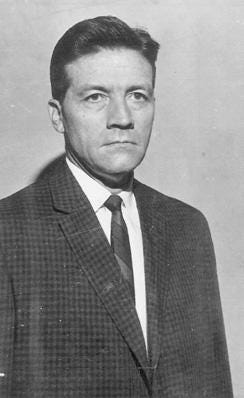
There are two kinds of men: those who shatter when life hammers them, and those who become harder. For John Boyd, the hammering started shortly after he was born and never let up, and it only ever made him tougher and meaner and less willing to concede. Born in the wrong century in Erie, Pennsylvania, the fourth child out of five, within a few short years his father was dead, his family was financially ruined, his younger sister contracted polio, and his older brother was committed to an insane asylum where he promptly and mysteriously died. All of this was made worse by a controlling mother determined to maintain the charade that the Boyd family enjoyed a respectable bourgeois domesticity. Despite her efforts, or because of them, the children were constantly humiliated at school. Boyd did the natural thing and spent all his time lifting weights and drawing pictures of airplanes. As high-school graduation approached, the Second World War was still grinding on, and if Boyd knew one thing it was that he didn’t want to be slogging through the mud, so he enlisted in what was to become the Air Force.
Boyd arrived late for his first war. By the time his training was done, the Axis had surrendered, and so he joined the American occupation forces in Japan. His service was unremarkable, apart from one bizarre and unlikely-sounding episode in which he and a group of fellow privates were forced to camp in tents in rainy and cold conditions despite there being wooden barracks housing standing empty nearby. Supposedly, Boyd led the other soldiers to go tear down the wooden buildings and use them to build campfires. For this he was scheduled to be court-martialed, but instead of apologizing he threatened to go nuclear and blow the whistle on how the troops had been treated by their incompetent commanders, at which point the army backed down. Every part of this story is plausible except the last bit, which strains credulity. The United States military does not generally give in to blackmail from privates. On the other hand, it sounds exactly like every other John Boyd story, and some of those have documentary evidence. We will never know.
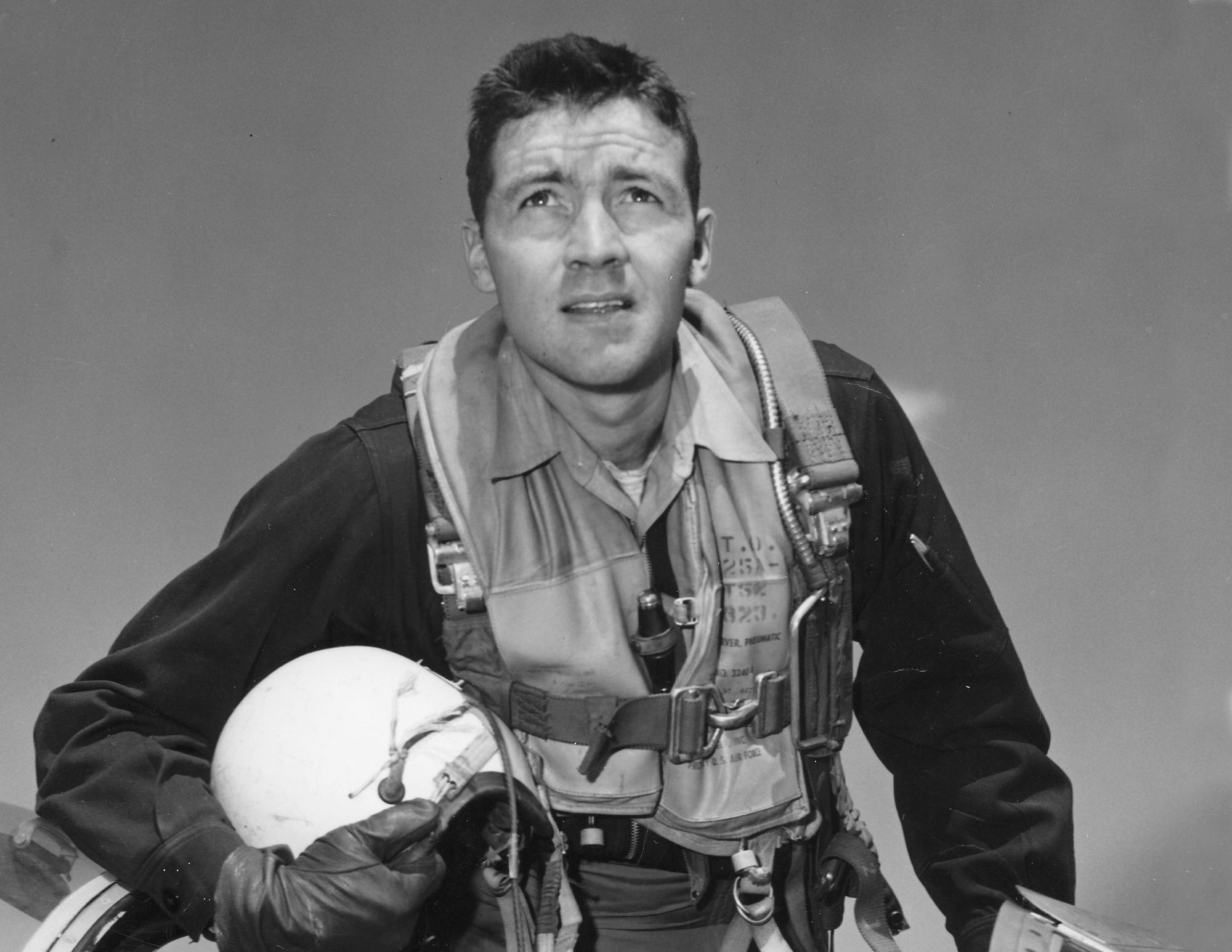
John was discharged from the army and attended the University of Iowa, where he met Mary Bruce, later to be his faithful and long-suffering wife and the mother of his five children. Or as Boyd put it: “I got nothing out of it.” Mary kept waiting for John to propose, but he ignored her because he was hopelessly in love with something else: the F-86 Sabre. By his senior year, the Korean War had started, and John’s only goal in life was to fly fighter jets in Korea and hopefully to shoot down a MiG. He joined the Air Force, and despite the newly commissioned Second Lieutenant Boyd excelling all his peers at flying training aircraft, he was deemed too tall for fighters and told to prepare to be a bomber pilot. Once again, Boyd went ballistic, screaming that bomber pilots were “a bunch of truck drivers” and that he did not want to be “in a crowded bus and have a bunch of people continually telling me what to do.” Once again, he got his way, and was sent to practice in a jet so cramped that if he ever had to eject, his legs would almost surely be amputated. Boyd was delighted.
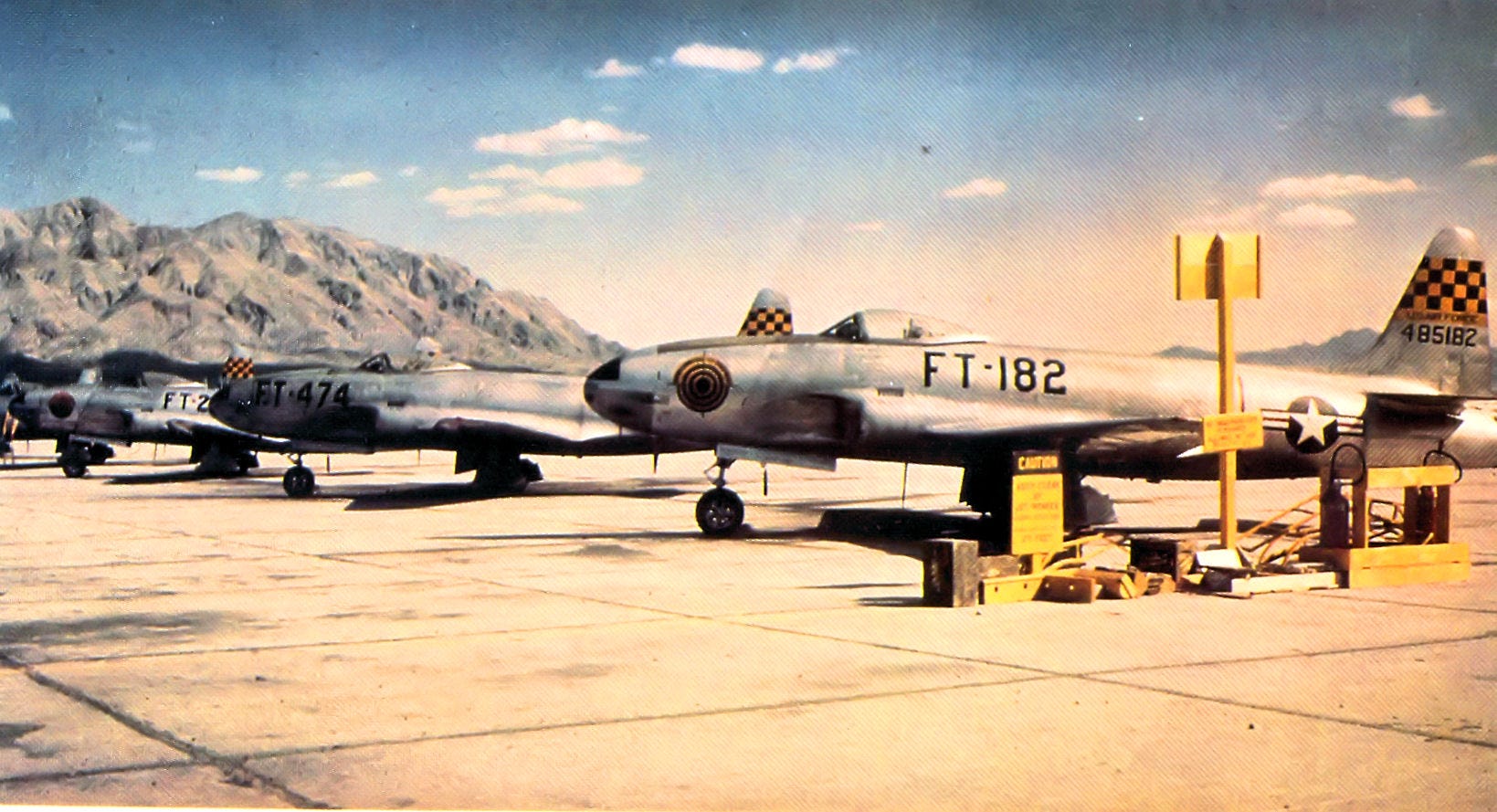
So off Boyd went to fighter school, with a brief stop to get engaged to Mary (who had still just been hanging around waiting for him to propose). The instructor at his base greeted him with the following speech: “If I had my way, we’d kill half you sons of bitches. The other half would leave here as fighter pilots… But the goddamn Congress won’t let me do that.” Nevertheless, they tried. Boyd said in his memoirs that in one year alone more than seventy pilots were killed in training accidents, and one military historian thinks that may be conservative because wing commanders doctored the numbers. Incoming students were sometimes told, “If you see the flag at full staff, take a picture.” Fighter jets had just been invented, and nobody knew exactly where their performance envelope extended. Nobody enjoyed pushing that envelope more than Boyd, who was intensely competitive and constantly “bending” the aircraft, pulling more Gs than anybody else and winning dogfights against instructors who were combat veterans from the Korean War.
Boyd arrived late for his second war too. By the time he got to Korea it was 1953, and all the good Soviet MiG pilots had gone home. So he never got to be in a real dogfight and spent all his time practicing against other Americans flying F-86s. Once again, he was a “good stick” and dominated all the competition, but this was the moment when he began to wonder if perhaps there was more to fighter tactics than he’d been taught. You see, fighter tactics at the time basically boiled down to “turn faster than the other guy, get inside, then shoot him.” It was the same thing pilots had been doing since World War II, or even earlier, just at higher altitudes and faster speeds. So Boyd sat in mess halls in Korea and closed his eyes and imagined aerial maneuvers, actual moves that one could do, and then he opened his eyes again and loudly explained them to his dining companions while poking his finger into their chests if he thought they weren’t listening carefully enough.
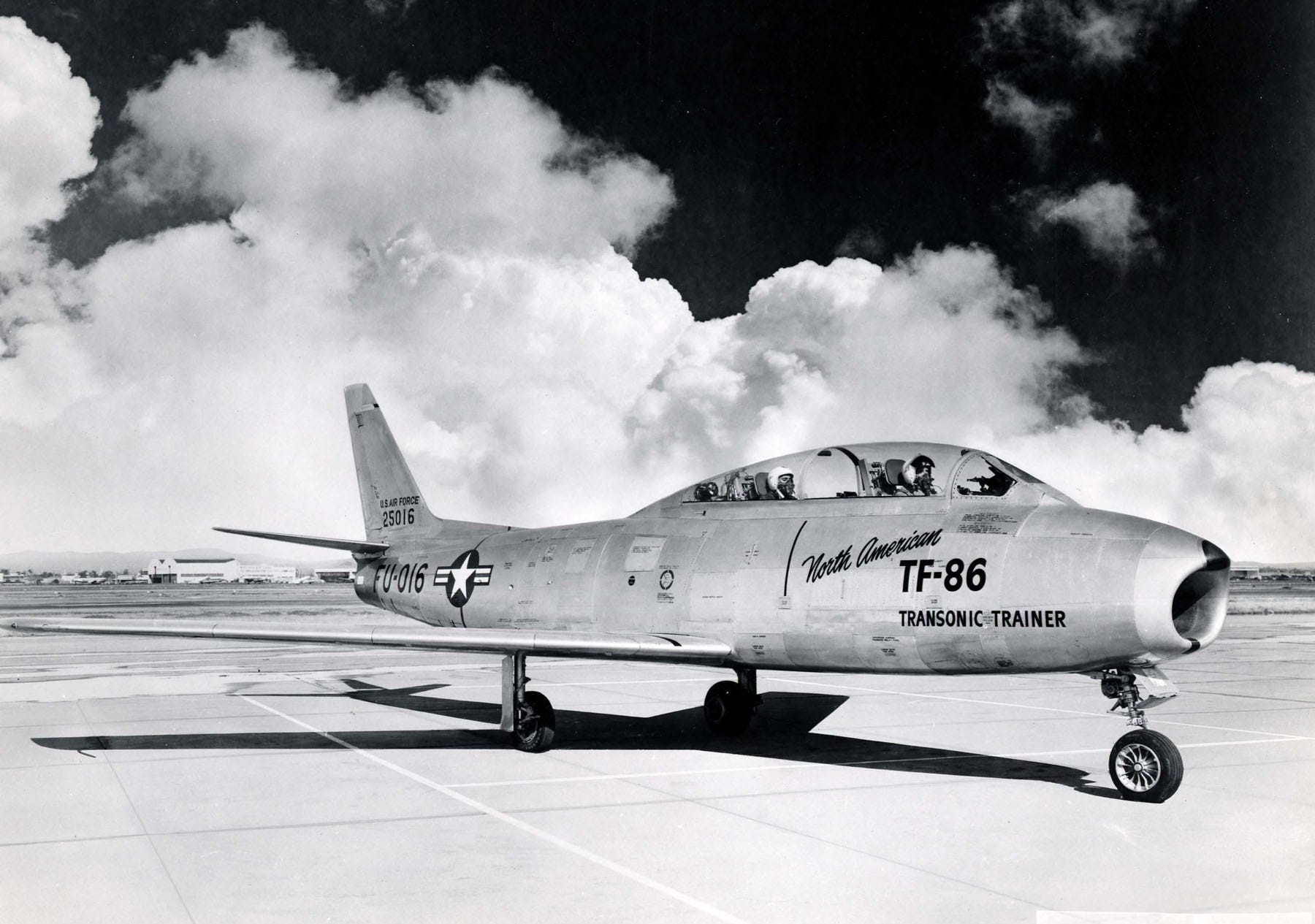
When Boyd returned from the war, he wanted to devote himself to studying and ultimately codifying a new set of fighter tactics that amounted to more than just “turn faster than the other guy and then shoot him.” This set him on a collision course with the Air Force in two different ways. First of all, the Air Force hated the idea of fighter tactics. The US military as a whole is gear-obsessed, but the Air Force took this attitude to an unbalanced extreme: it was an outright technocracy that cared only about how to procure faster and more expensive planes. Why waste time thinking about how to use an airplane more effectively when we could be funding development of a more advanced one? Anyway, everybody knew that air-to-air missiles were about to be invented that could be launched from ten miles away, so fighter combat would just be about pressing a button. Dogfights were a thing of the past and people who cared about them were relics.
Before we sneer too much at the Air Force here, let’s reflect that there are places on the technology learning curve where this kind of thinking makes sense. And if you want a more modern example than the transition from oxen to horses as draft animals and from water to coal as an energy source, consider the “bitter lesson” of AI research. A recurring theme of the past few decades is that cleverer algorithms get beaten by very dumb algorithms with more compute, more data, more parameters, and more electricity thrown into them. Or for an even more direct analogy, consider all the wasted effort that was spent trying to harness and direct and work around the inadequacies of last year’s AI agents, when actually you could just wait for another trillion dollars of capex to deliver you this year’s AI agents. Do you remember MCP servers? Yeah, me neither. So the Air Force’s position here was not a priori ridiculous, it just happened to be wrong.1
But beyond hating fighter tactics, the Air Force also hated fighters. The men who now ran the Air Force had all flown bombers in World War II. Bombers were bigger and more expensive than fighters, so procuring them required larger budgets, which was good for everybody’s career. Most importantly, bombers delivered nuclear weapons. They would fly so high and so fast that no fighter could intercept them. The most important man in the Air Force was Curtis LeMay, the head of the Strategic Air Command. He had the largest budget in the Air Force, and the Air Force had the largest budget in the military. He used his budget to build an enormous globe-straddling force of bombers and the nuclear weapons to put in them. “Flying fighters is fun. Flying bombers is important,” LeMay once said. Because they were so important, officers in the Strategic Air Command were promoted more quickly, ensuring that the Air Force continued to be run by bomber pilots. If a real war ever broke out, the only thing fighters would be good for was delivering tactical nuclear weapons to targets too small for the bombers to worry about. Basically, a fighter is just a smaller bomber with less range and less capacity for bombs. Why even have them, anyway?
After the Korean War ended, there were hordes of excess fighter pilots that the Air Force didn’t know what to do with (because Korea was an anomalous war with lots of air-to-air combat, but that would never happen again). Many of them were shunted off to maintenance or facilities postings, or converted into budget-rate bomber officers. This was to be Boyd’s fate as well until yup, you guessed it, he threw a giant fit and screamed and demanded special treatment. Which is how he wound up at what was then Fighter Mecca — Nellis Air Force Base, known for its unusually high rates of court-martial and sexually-transmitted disease. Here in this backwater, and especially at its Advanced Flying School, was the one place that fighter aviation was taken seriously, and it’s where Boyd would make his first of several marks on history.
Before he did that, though, life had another blow to deal him. In 1955 the US government approved the polio vaccine, and the disease was all but eliminated shortly thereafter. So America’s final polio epidemic occurred in the summer of 1954, and that was when, shortly after moving across the country to take a new job, Boyd’s infant son Stephen contracted the disease:
Stephen’s polio was especially severe. Sandbags went on his legs and braces on his back. Boyd went to a swimming-pool manufacturer and bought a small pump that he installed in the bathtub so Stephen could lie in warm swirling waters. The dining-room table was cleared and turned into an exercise table and every morning Boyd and Mary held Stephen and pulled and tugged and stretched his legs and massaged his atrophying muscles as he screamed with pain. Boyd often used his lunch break to come home and give Stephen additional exercise. Twice Stephen almost died.
Recall that Boyd’s older sister Ann also had polio, which naturally caused all of Boyd’s relatives and acquaintances to send him helpful notes explaining that it must be hereditary. Meanwhile, Mary was pregnant again and constantly ruminating as to whether the new baby would also contract the disease (either from her husband’s defective genes or from a sickly older brother). Finally, she decided that the solution to Stephen’s health problems lay in the mineral-rich waters of Warm Springs, Georgia. So Boyd sold his car, bought a station wagon (so that Stephen could lie down in the back), and began the first of many horrible trips with no purpose. The car had no air-conditioning, and as they drove for three days through the American South to their destination and back, the baby’s metal braces would get uncomfortably hot, and he would scream the entire way there and the entire way back. As the kid grew to be a toddler, Boyd had no money to buy a wheelchair, but he nailed some boards together and attached skate wheels to the bottom and taught his son to lie on the makeshift skateboard and propel himself with his hands.
Meanwhile, Boyd’s career was taking off. He was gifted with an uncanny knack for flying airplanes, and was equally good at teaching others how to fly them. The two skills were almost certainly connected; Boyd himself once said: “The only way to get a fighter pilot’s attention is to whip his ass,” a pithy encapsulation of the view frequently espoused in this substack that leaders must be great at the object-level details of what their followers do (see also here). Boyd wrecked everybody who went up against him in training exercises. He was so good at getting a feel for the physics and dynamics of airplanes that he diagnosed a dangerous adverse yaw instability in the F-100 Super Sabre that dozens of accomplished aeronautical engineers and test pilots couldn’t figure out…and then he used that dangerous adverse yaw instability to his advantage to win more simulated dogfights.2
Finally, Boyd put out a challenge to all US-aligned fighter pilots, domestic or foreign: come meet him in the air above Nellis Air Force Base, and Boyd would let them start on his tail, and within forty seconds he would have reversed their positions and “shoot them down” with simulated cannon fire. This boast was outrageous. Sure, a skilled pilot could lose a tail and turn the tables on a pursuer, but consistently doing it in forty seconds was preposterous. Countless young pilots took him up on this challenge, and Boyd defeated every single one. Often he did it with time to spare. His renown spread across America and Europe and he became known as “Forty-Second Boyd”:
Nothing in Boyd’s long and tumultuous career causes such a violent reaction among old fighter pilots as hearing about the invincible Forty-Second Boyd. It sets their teeth on edge. They say all this business about being the best is a boy’s game and that there is no “world’s greatest fighter pilot” — that even the very best pilot can have a bad day. The quote the adage “There never was a horse that couldn’t be rode and there never was a cowboy that couldn’t be throwed.” But if they went through Nellis in the mid- and late 50s, they knew there was someone better. And it still rankles.
[…]
Boyd’s standing offer struck fighter pilots at the very core. He was rubbing their noses in his superior ability. The offer was a personal affront to every man who considered himself a fighter pilot. No one could be as good as Boyd was supposed to be. Fighter pilots ached to see him beaten. Word would have swept through the Air Force in days about the pilot who defeated Forty-Second Boyd. The pilot who defeated John Boyd would have been remembered…
But nobody ever did.
As the undisputed greatest fighter pilot and instructor ever (at least in his own mind), Boyd decided it was time to write an official manual of aerial tactics and doctrine. So he asked to be relieved of his flying and teaching duties for a year to put the manual together. When his boss, the commandant of the Fighter Weapons School, told him absolutely not, Boyd leapt out of his chair, and strode over to the superior officer screaming and ranting, and began poking his fingers into the man’s chest while ashes fell from his lit cigar and cascaded down the colonel’s dress uniform. Finally, Boyd screamed: “Godammit, I’ll do it on my own.” He was as good as his word, working on the tactics manual late at night after a full day of flying, and tormenting his colleagues by calling them at 3am with whatever new idea he had gotten while writing.
When Boyd’s manual was finally completed and edited after months of grueling late night and early morning work, he received the unwelcome news that it would not be used to instruct new pilots. You see, the Air Force had put together an official manual of fighter tactics — a 15-page pamphlet that amounted to “turn faster than the other guy and then shoot him.” To rub salt in the wound, Boyd’s manual was then classified, so he couldn’t even publish it himself (ostensibly the classification was because it contained information on how a fighter jet could outmaneuver an air-to-air missile, something that the Air Force brass hated because they were big believers in missiles). But Boyd’s renegade tactics manual was eagerly devoured by pilots, who shared it around like samizdat and made photocopies of it, and mailed it to friends at other bases. Years later, the Air Force would finally delete the section on how to outrun missiles and publish an unclassified version.
At the age of thirty-four years old, having fought in two wars and spent five years screaming at younger fighter pilots, with four children and a wife pregnant with their fifth, John Boyd decided to become an undergraduate at Georgia Tech. He was a bit of an outlier on campus, and tried to hide a bit by wearing civilian clothes to class, but there was only so much he could hide when “his voice could be heard a block away and his language could peel paint off the old buildings.” One classmate of his recalled, “I’d love to have introduced him to my brother or my daddy, but not to my mamma. That was the cussingest man I ever met.”
Boyd was there as part of an Air Force program to send promising young officers back to school to get advanced degrees in engineering, but the real reason he was there was that he had picked up a little bit of thermodynamics from a textbook and had something nagging in the back of his brain, telling him that there was a deep connection to fighter tactics and aerobatics, something that the whole rest of the world had missed. And indeed, he was right. By applying fairly basic Lagrangian mechanics to the kinematics of airframes, he developed something that would come to be known as Energy-maneuverability theory. Essentially, he developed equations relating an airplane’s specific excess power (the rate at which it can gain or lose energy, normalized by aircraft mass) to its thrust, drag, velocity, and so on. And since Boyd had just established with his tactics manual that energy management was the essence of aerial combat, by producing E-M contour plots across different combinations of velocity, altitude, turning rate, etc., you could map out a fighter’s performance envelope and combat potential across all possible flight conditions.
Everybody thought he was insane. If the reception of his fighter tactics manual was chilly, then attitudes towards the E-M theory were downright frigid. But my own reaction on reading about all of this was disbelief: are you really telling me that twenty years after the development of jet aircraft, with thousands of smart people applying their minds to it, we still had no idea how to systematically analyze the performance of those aircraft? And yet as far as I can tell this is actually true. As simple and obvious in hindsight as it was, Boyd’s E-M theory broke completely new ground and changed fighter aircraft design from a vague, vibes-based activity to an actual science.
I think there’s a lesson here about technology more generally: after a major new breakthrough happens, there is often a ridiculous amount of low-hanging fruit lying around in nearby parts of the tech tree. Not to keep using AI as an example, but if all model capabilities progress stopped tomorrow, we’d probably still be spending the next 50 years figuring out how to extract economic and military value from what’s already been done. That was certainly the case with the internet, where in some sense we are even now not yet done working through the implications of technology developed in the 1960s. By the way, this is why the technology frontier is a nicer place to be. Near the frontier, small teams of amateurs and gentleman scientists still have some hope of beating the professionals. Near the frontier, not all the alpha and not all the slack has been squeezed out and devoured by Moloch. It is actually inspiring and exciting that one guy who hadn’t graduated college could figure out that everybody else was thinking about airplanes all wrong. Imagine what’s out there for you to figure out today!
Now let’s go back to that guy who’d just figured out that everybody else was thinking about airplanes all wrong. His theory was good, but for it to be useful somebody had to actually compute the E-M contour plots for a variety of friendly and hostile aircraft across a wide range of flight conditions. Fortunately, at this time Boyd was stationed at Eglin Air Force Base, where vast rooms full of military computers were calculating important things like how many nuclear bombs ought to be dropped on each city in the Soviet Union. Unfortunately, Boyd’s behavior had finally caught up with him and his posting was in…Maintenance. There was no way that anybody was going to let him touch those computers. This time, screaming at people didn’t work. Demoralized, Boyd’s appearance turned slovenly, and he developed a nervous tick of chewing on the flap of skin between his thumb and index finger. So now, in addition to being an acerbic weirdo, he was the acerbic weirdo who looked like a hobo and spat bloody scraps of loose skin all over you while he was yelling. This did not make it easier for him to get access to military computers.
So things might have remained, had Boyd not struck up a friendship with Tom Christie, a civilian mathematician working at Eglin and an expert bureaucratic operator. Christie came up with hilariously inventive ways to steal computer time for Boyd’s calculations, and then Boyd would go off and ruminate on the results for a few days before coming back with requests for more calculations. Gradually a picture was emerging, and the picture was not good. US aircraft designers, in thrall to the idea that a fighter was basically a bomber but worse, had built hideously underpowered and unmanouverable planes. The E-M diagrams were clear: Soviet aircraft would have an energy advantage in basically any conceivable matchup. Dogfights would be a bloodbath, and the Americans would lose every one. This was not what the Air Force wanted to hear — they liked their big, slow airplanes and the equally fat contracts that went into building them, and besides, haven’t you heard that dogfights will never happen again and victory will be determined by who has the biggest radar and the longest-ranged missiles? But Boyd kept at it, and then in 1965 the American ground war in Vietnam started, and US planes started getting consistently shot down by MiGs in exactly the way Boyd predicted. Soon thereafter, Boyd and Christie were reassigned to the Pentagon.
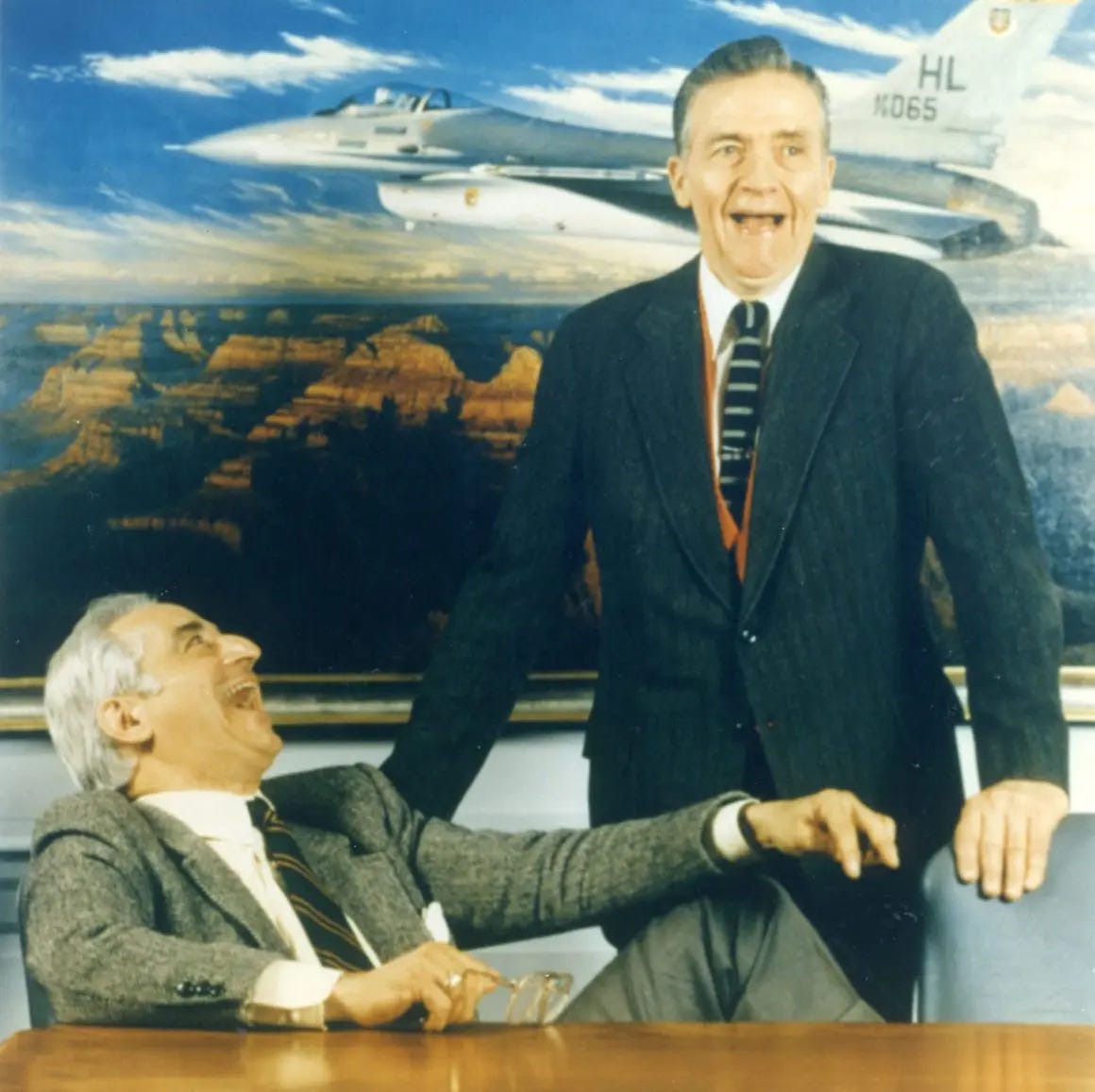
It was at the Pentagon that Boyd met his other great collaborator and intellectual partner, a civilian analyst named Pierre Sprey. Sprey was the opposite of Boyd in many ways, a polished and erudite European polyglot who went to Yale at the age of fifteen and graduated with degrees in French literature and mechanical engineering. Women found him gallant and rakish, men found him cold and biting, and corrupt Pentagon bureaucrats found him their worst nightmare.3 Sprey became one of McNamara’s “whiz kids” and was sent to Washington to analyze the Pentagon budget. He immediately wrote a report that imperiled two thirds of the Air Force budget. The generals were apoplectic and exerted enormous pressure to bury the report, but Sprey was a fiendish workaholic who knew everything there was to know about airplanes, had an unbending code of personal honor, and refused to revise or falsify his data. Finally, the generals decided the only way to beat a smart guy was with another smart guy: they sent in Boyd. This was the worst idea ever. Sprey and Boyd instantly became thick as thieves and spent the next few decades terrorizing the slimy creatures that infested every office and corner of the Pentagon (with Christie providing occasional bureaucratic cover).
Their first big showdown with America’s defense establishment was over the airplane that was to become the F-15. The development history of the F-15 before Boyd and Sprey got to it was a perfect illustration of Elon Musk’s theory of how requirements bloat ruins everything. Musk’s approach, which has been very successful, starts with a theme this Substack is obssessed with: in school everybody is trained to answers exercises that are treated as givens rather than to question whether the exercises are good ones, but that subtle bias has cataclysmic effects when it comes to the design of mechanical artifacts because unnecessary parts or requirements can have cascading, exponential effects on overall system complexity. For example: adding an unneeded component increases the weight of the airplane or rocket, which means it needs to carry more fuel, which means it needs bigger fuel tanks, which means it needs a stronger airframe, which further increases the weight, which means the fuel tanks need to be even bigger, which needs the engines need to be bigger, which means they need active cooling, and so on in a doom loop of rising costs and failure modes.
So Musk’s philosophy is that you need to be absolutely savage about deleting everything from your design that is not required. This philosophy is not compatible with federal defense procurement, which tends to involve a lot of design by committee and a lot of putting a hot tub in your limo to win over some crucial constituency (see, for instance, the F-35, which tries to be all things to all people and does a mediocre job at all of them).4 This tendency is exacerbated by the defense contractors themselves, who let’s just say don’t mind if the war machines they’re hired to build are astonishingly complex and expensive. The contractors were used to getting their way, and then one day they started running into John Boyd:
Defense contractors had a cozy relationship with the Pentagon… They were used to swaying these men by taking them to expensive Washington restaurants and ordering lobster and steak and wine and picking up the tab. Defense contractors are powerful men. And they thought this young major, this John Boyd, could be easily influenced.
[…] he listened, chewing on his hand, and stared unblinkingly at the contractor. When he had enough he stopped chewing, spit out pieces of skin, jabbed the contractor in the chest, and exploded. “You are the dumbest son of a bitch God ever made” or “You don’t know what the fuck you’re talking about” or “You stupid fuck. That will never work.”
Defense contractors are not used to being talked to in such a fashion. Often they sat there a moment in shock. Boyd moved even closer and shouted louder, “Do you get my meaning?” or “Do you hear what I’m saying to you?”
Almost every time a defense contractor left his office, Boyd turned around and said to all in hearing, sometimes before the contractor was through the door, “The one thing you can always expect from a contractor is that he will hand you a load of shit.” If he suspected a contractor was trying to deceive him, he looked for evidence. He prepared for a confrontation. When he found the evidence, he did not say he had found the proverbial smoking gun. Instead he walked into his office, threw his arms wide, and trumpeted, “I have found the dripping cock.”
Secretaries wept at Boyd’s language. Several threatened to quit. When generals complained about Boyd’s language, he said he did not mean to sound disrespectful. “I’m just a dumb fighter pilot. I don’t know any better. I had an IQ test in high school and they gave me a ninety.”
In the case of the F-15, the unnecessary requirements that Boyd and Sprey battled against were things like being able to fly above Mach 3 (most dogfights begin at subsonic cruising speed and E-M theory tells us that ability to gain and shed velocity is much more important than absolute top speed), having a massive radar dome (because this time dogfights are over and aerial combat will be one by shooting missiles from over the horizon), and having intercontinental range (because obviously a dedicated air superiority fighter needs to be able to deliver tactical nuclear weapons). They won some of these battles and lost others, then regrouped and fought them all over again in the design of the F-16, where they won a whole lot more.
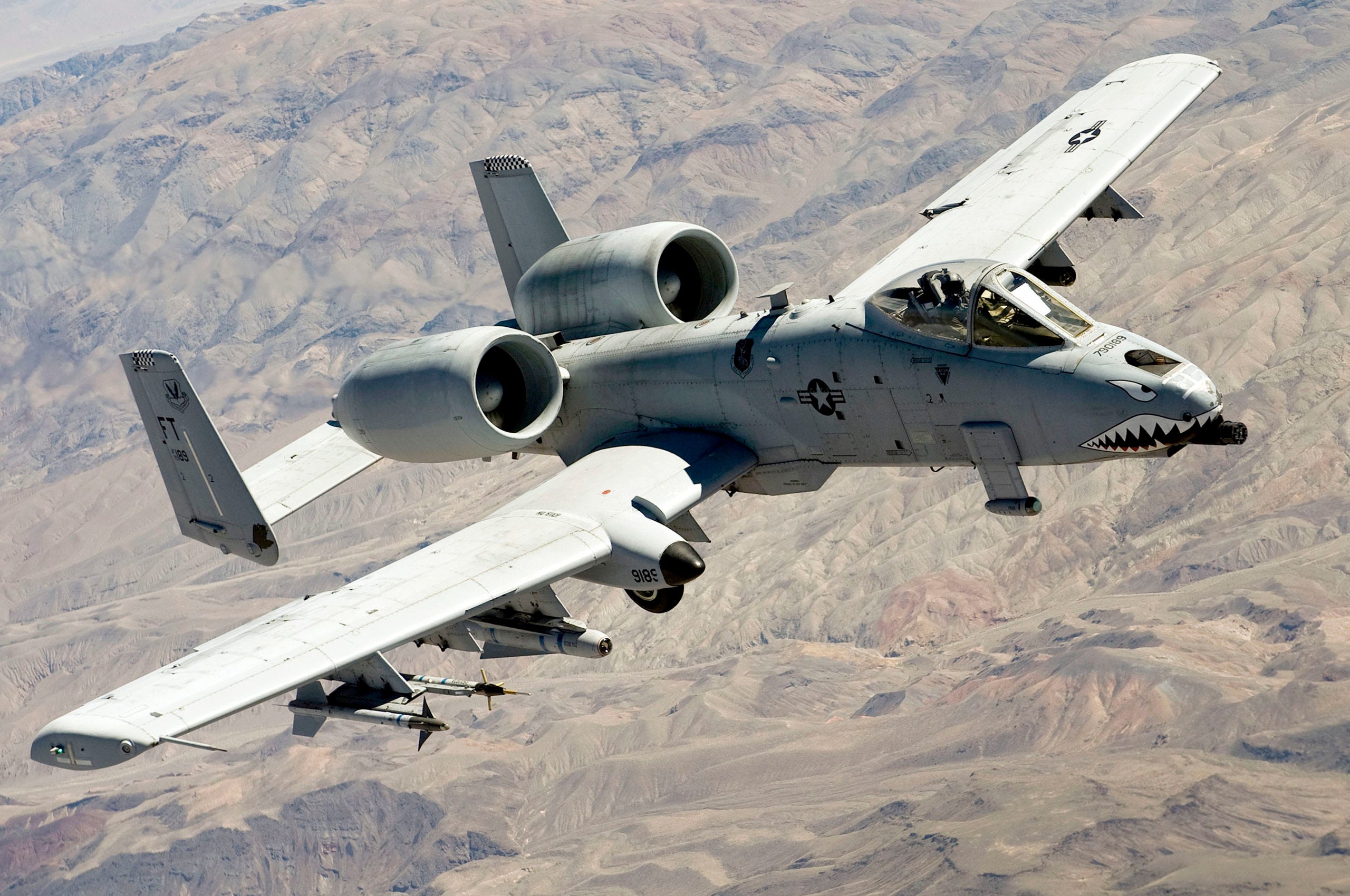
Another version of all these battles happened when Sprey went off on his own and designed the A-10.5 The Air Force was predestined to loathe the A-10, because its mission is what’s called Close Air Support (CAS), that is, supporting forces on the ground. The Air Force doesn’t like being reminded that CAS is one of their jobs, because the Air Force doesn’t like thinking of itself as an adjunct or supporting pillar of the main ground effort (this is another reason why strategic bombing was so ideologically attractive to Air Force generals). Perversely, this made the A-10 a better airplane, because Sprey was obsessed with CAS and all the Air Force bureaucrats who would have ruined it wanted to stay away anyway. So Sprey got almost complete control of the design and was able to tyrannize the contractors with demands that RFPs be no more than 30 pages and that prototypes be tested by shooting at them with real Soviet weapons. The resulting plane was what you get when Pierre Sprey deletes all unnecessary requirements and optimizes an airplane for CAS, survivability, firepower, and cost, and to the Air Force the A-X (the pre-production name for the A-10) was an unholy abomination:
Rather than having flammable and vulnerable hydraulic controls, the A-X would have mechanical cables and push rods — redundant dual cables — to control the flight surfaces. Sprey insisted that the A-X must be able to maintain flight even with half the control surfaces shot away. As for armament, the A-X was built around a radical new cannon that fired banana-sized depleted uranium bullets. To protect the pilot, the cockpit was surrounded by a titanium bathtub.
The Air Force despised the A-10: they called it the “Warthog” because it was so slow and so ugly, and they spent the next 50 years trying to kill it despite the fact that it is cheap, reliable, and has exceeded expectations in every military conflict into which it’s been deployed, over half a century, without major upgrades. When I began writing this book review it looked like the Air Force might finally have convinced Congress to let it junk the A-10 in exchange for the (much worse at CAS) F-35, but just the other day I saw a news article saying that A-10s were being deployed to the Persian Gulf as part of Operation “Epic Fury,” so perhaps the Warthog will get one more solid war in before the end.
For the next couple decades, Boyd continued his lonely crusade against the defense procurement establishment from inside the Pentagon, and an account of those years forms one of the most entertaining sections of the book. He was joined in these battles by a whole host of unlikely allies, and the two most important continued to be Christie and Sprey. But the duality of Christie and Sprey extends far beyond the life of John Boyd: to me they represent the two effective approaches to managing a colleague who is highly-energetic, intelligent, disagreeable, inflexible, and maybe slightly autistic. Have you ever worked with somebody like Boyd? You know the type I mean: talented beyond measure, but also willful and self-righteous and their own worst enemy. I’ve certainly met my share of such people. Heck, I’ve been that person once or twice. If properly handled, they can be made to achieve greatness; if not properly handled, they can blow up your shared effort. Being able to shepherd the Boyds on your team can be a managerial superpower. So then, how do you do it?
Christie shows us one approach — offer them something in return that they cannot possibly get on their own: political cover. Say to them, “gosh John, I agree that this theory sounds really promising, I agree that you should be working on this instead of on dumb maintenance tasks. But in order to get the brass off your back, I am going to need you to do tasks A, B, and C by next Thursday. Make me look good, so I can stick around and help you in return. Yes, I know it’s stupid, just let me do the stupid part, all I need from you is A, B, and C…” This is related to the view which says that leadership is about clearing obstacles out of the way of high-functioning people, but it works a little differently when the person in question is high-functioning in a spiky way. You can mess this up by getting too explicitly transactional, because then you will offend the sense of honor of the Boyd in your life. Try conspiratorial instead: it’s you and him against the dumb rules, and you really wish you could break the rules, but alas… So look man, can you please just do it this way? Obviously this is easier if the organization you’re in is actually dysfunctional, but to the Boyds of the world every organization is dysfunctional, and you need to learn to see it from their point of view. It also only works if you’re actually on their side. You need to appreciate them, you need to love and respect them the way that Christie loved and respected Boyd, even when they are at their most self-defeating and exasperating. If you’re faking it just to get something out of them, the entire vibe will be off and everybody will be able to tell. And if it’s hard for you to love and respect somebody who sprays bits of skin all over you while screaming profanity, well yes, it can be hard. But the good news is that God wants you to love and respect them anyway, and fortunately for you in this case doing the right thing will also get you the result that you want.
The other option is exemplified by Sprey, and it’s even harder but works even better if you can pull it off. You need to just be better than the high-functioning weirdo at whatever it is they value. Roll up your sleeves and show them what you can accomplish at the thing that they are truly excellent at. Win their respect by being great at the thing they’re great at, and they will be more inclined to listen to you when it comes to the things that they’re bad at. Be like the Mongol leader who can beat up any of his men in single combat. When Sprey talked, Boyd listened, because Sprey had already shown that he was worth paying attention to by being as good or better than Boyd at designing airplanes. Yes, that means you may need to be better than the autistic genius on your team at Geoguessr in order to get him to stop chewing his hands in front of the general. I told you it wouldn’t be easy. But maybe you can be a little sneaky and work extra hard, so long as they don’t see you sweat. I once had a manager who, his first day on the job, did the corporate equivalent of beating up the biggest dude in the prison block. What I didn’t learn until years later was that he’d spent countless hours preparing and practicing for that moment. You don’t have to win every single time. Once might be enough to convince the Boyd in your life that you’re more than just a talker, more than just another company man, somebody worth following.
We’re 6,500 words into a review of a book about John Boyd’s life, and we haven’t actually gotten to OODA loops yet. And there’s plenty more besides: Boyd’s tour of duty running a CIA base in Southeast Asia, his time as an instructor at the Marine Corps Amphibious Warfare School (after finally offending one general too many and getting booted from the Air Force and the Pentagon), and his huge influence in reintroducing the concepts of Blitzkrieg-style maneuver warfare to a US military obsessed with firepower and attrition. But instead, I want to turn to a hermeneutical landmine that must unsettle our interpretation of this text. You see, the author of the book, Robert Coram, is clearly very taken with Boyd. Who wouldn’t be? He’s a romantic figure, idolized by the friends and collaborators who made up most of Coram’s sources for this biography. And the thing Coram is most taken by, the thing he spends the final hundred pages or so building up to, is Boyd’s magnum opus: an essay called “Destruction and Creation” which Coram thinks is so important he literally reprints it in an appendix. Coram explains to us, giddily, that “Destruction and Creation” may be one of the greatest things ever written…on any topic! You see, it reconceptualizes the entire history of military conflict in terms of Gödelian incompleteness and Sun Tzu and the Heisenberg uncertainty principle and… Oh… Oh no. Are you getting a bad feeling all of a sudden? Do you also feel that sinking in your stomach? Maybe we should just…not go read that essay ourselves…
Bad news, it’s available right here and it’s absolutely horrible. Just the most pretentious midwit pseudo-philosophical dreck masquerading as profundity. Now let’s be clear: this disaster of an essay only makes me think a little bit less of Boyd, because after all which of us hasn’t written something that we later came to regret? If Boyd, after several very real and impressive intellectual breakthroughs, finally succumbed to the Curse of the Autodidact, well, he’s probably still ahead of most of us. What I’m more concerned about is Coram. If he thinks that this is the most brilliant and insightful document ever produced, then it calls into question literally everything else he has written in this book. We can’t just succumb to Gell-Mann amnesia here. Either Coram is himself a submental midwit, or he’s so blinded by adulation of Boyd that he’s prepared to overlook and even endorse an objectively very stupid essay. Either possibility is terrifying, because it means we must now go back and read the entire book esoterically, not taking Coram’s word for anything, hunting through it for clues and inadvertent scraps of evidence so we can piece together what’s really going on.
Well, I don’t have time to do that, and probably neither do you. Instead, let’s close by taking Benedict XVI’s advice for how to read the Gospels: look for “scandals.” If you’re reading a biography that you suspect was written by somebody who worships the subject, pay especially close attention to the parts where they say stuff that’s against interest, or that complicates the picture they’re painting, because those parts are probably especially important.6 Boyd was clearly a guy with many unrelated kinds of brilliance. When I first picked up a biography of the guy who invented the OODA loop, I was unprepared for him to also be one of the greatest fighter pilots ever, and an excellent (if unsophisticated) mathematician, and a spatial genius with an intuitive feel for complex aeronautics. Of course I should not have been surprised. Real life is not an RPG character creation screen, where putting points into one thing makes you bad at others. In real life, people who are extremely good at one thing are generally more likely to be extremely good at others. Contrary to stereotype, the best athletes tend to have above average intelligence, and really great mathematicians tend be really great writers, and so on. People don’t want to hear about this, because it rubs salt in the wound of how life is fundamentally unfair, but it’s true (and probably correlated with overall mutational load — another reason you should have kids when young).
But there’s one area in which, Coram tells us, Boyd was decidedly not brilliant: his relations with his own immediate family. His long-suffering wife Mary tolerated all his eccentricities and career self-sabotage while raising five children (one of them severely disabled), and in return he regularly humiliated her in front of others by calling her dumb and saying he found her in an Iowa cornfield. His kids he mostly ignored; several of them became estranged from him, and one was institutionalized. His most successful relationship was probably with the younger son who drove a motorcycle around inside Boyd’s apartment and owned a seven-foot Sri Lanka cobra, forty tarantulas, an emerald tree boa, a canebrake rattlesnake, a timber rattler, and a rare tailless whip scorpion called a “vinegarroon.”7 Boyd’s living conditions reflected the state of his home life — his entire family lived in a dingy subterranean apartment (which Mary hated) with rotting wallpaper and rooms full of detritus, until they were finally evicted by their landlord (one of several reasons his coworkers started calling him “the ghetto colonel”).
And in that light, it behooves us to turn back to all the funny, outrageous stories of Boyd in the Air Force. All the superiors he swore at and offended, all the stiff-necked refusals to play along and get along. Coram sees them as evidence of Boyd’s nobility, and perhaps in one sort of way they are, but they’re the same qualities that turned his home life into a ruin and caused him to fail in a married man’s most sacred duties, those to his wife and children. And once we’ve noticed that, we can’t help noticing that for all his brilliance, Boyd probably had a tenth the influence he might have had in a world where he could hold his tongue and play nicely with others.
Clearly Coram’s sources, Boyd’s collaborators and co-conspirators, all loved him. But to what extent was it true admiration, and to what extent the patronizing love you have for your childhood friend who was super smart but smoked too much pot and never got his life together? Boyd achieved more than most men born in Erie, Pennsylvania during the Great Depression could ever dream of, yet considering the natural capacities he was given, we must consider his life a failure. From those to whom many talents are given, many more will be expected.
The fact that the economic incentives of the defense contractors, and indirectly of the Pentagon procurement officers, were served by taking this position surely did not hurt its adoption.
Boyd kept exploiting the airplane’s design flaw on purpose, but his insight into what was wrong with the plane probably saved the lives of hundreds of pilots.
After retiring from the DoD, Sprey became a jazz producer in exurban Maryland. One of his tracks was sampled on the Kanye West hit song Jesus Walks.
Incidentally, one of the bitterest opponents of the F-35 program was a much older and retired Pierre Sprey, but this time he lost.
Lately, revisionist historians have started to allege that Sprey did not design the A-10, but in the Psmith household Pierre Sprey is a hero, end of story.
In the case of the actual Gospels, the late Pope says you should pull out an electron microscope for the part where Jesus is baptized by John; because in the turbulent atmosphere of first century Palestine, when there were still many people who believed that John the Baptist was the Messiah, it would be crazy for one of Jesus’ disciples to make that part up.
Boyd got in a huge fight with this son when he failed to launch and had to move back into his parents, and Boyd drew the line at the scorpion and the forty tarantulas. So his son kept them all in his car and would go out once a day to feed them and talk to them.
The next time someone questions my claims about men vs. women, I will direct them to this comment section.
The book was fine, but: in practice, the F-15 did great, and the F-35 is doing great right now.
The A-10 was NOT great at its nominal purpose (smoking Soviet tanks with its gigantic peni-I mean, cannon)-see here: https://apps.dtic.mil/sti/tr/pdf/ADA084155.pdf -and in practice is more useful as a platform for Maverick missiles. It was originally snuck through because the Vietnam War showed that fast movers are not great at spotting targets on the ground, especially under cover/foliage, and the forward air controller planes whose job was circling around and designating targets for the fast movers tended to get shot to shit by those targets, which weren't wild about getting designated. Presumably, in the European theater of operations, there would be a lot more ground fire from things like the ZSU-23 Shilka, the Tunguska and other Soviet stuff which the NVA didn't have. Therefore, a very heavily armored forward air control platform was called for. For reasons, the Air Force didn't want to pay for one, nor for the Army to build its own, so they built the A-10 as a ground attack aircraft. In practice, the FAC job is done by drones today, and the A-10 has been relegated to places where enemy air defense has been suppressed or never existed in the first place.