


Jane: Well, we’ve done it again: despite the many forces militating against us (our children, your job, an exciting variety of upper respiratory infections, that one time my library e-book expired halfway through writing my review and I had to pay for an actual copy), we’ve kept this wacky joint project going another year.
As regular readers know, this is the post where we navel-gaze about Our Process and crow about our stats, but although we more than doubled our subscribers this year there’s really only one thing that matters: that little white “bestseller” checkmark next to our names. Yes, more than a hundred people decided they like what we do enough to give us money (despite the fact that all our posts are unlocked and we never ask for it), which makes me feel much less guilty about things like paying for that library book. See what sort of irresponsible profligacy you’re enabling, paid subscribers?
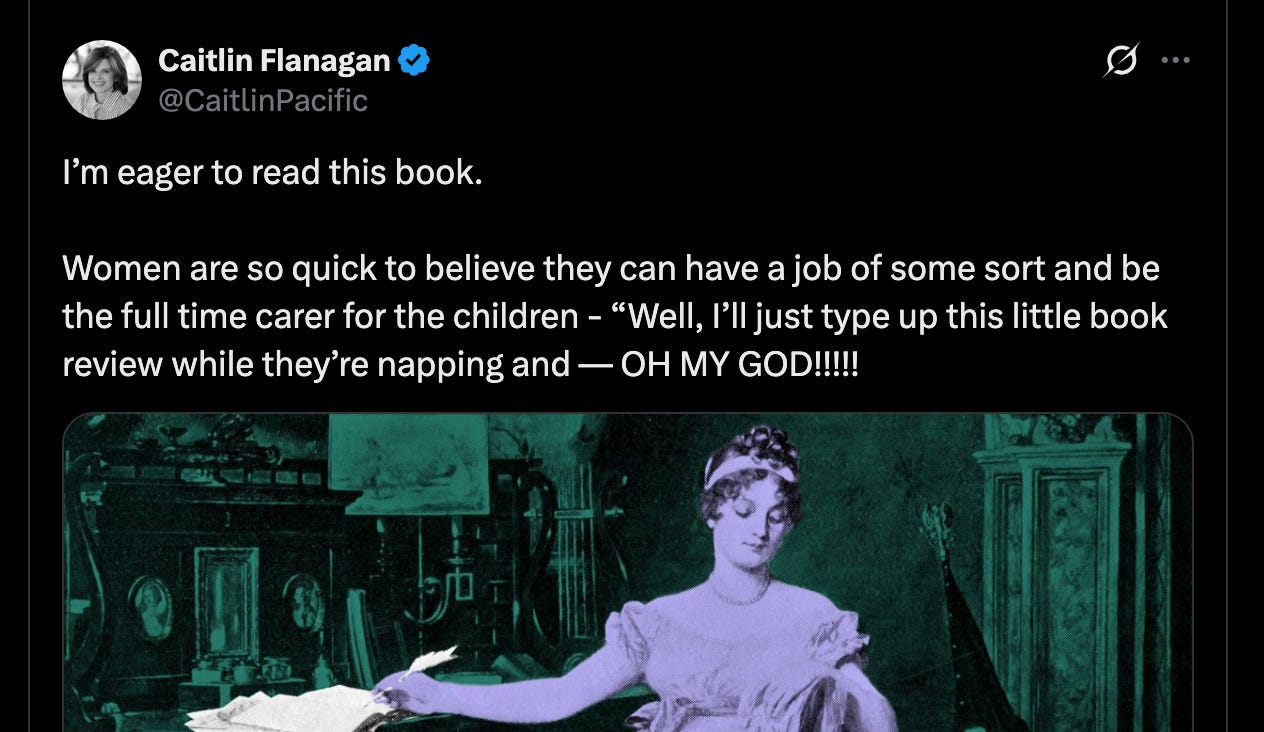
This year was more productive than last: I wrote seven reviews (nine if you count the joint ones) but read only 82 books. (Honesty compels me to admit than seven of those were WH40K novels.) I’m rapidly running out of time to pump up those numbers! But frankly, people sometimes ask when we have time to do all this reading and writing, and my answer is always “naptime.” I get about 90 minutes per weekday to do all the things that cannot be done in the presence of a toddler with zero chill, so you can always tell if I’m working on a book review by the number of shirts waiting to be ironed and the intricacy of our dinners. Sorry kids, we’re having meatloaf and roast broccoli again, because Mommy spent naptime riffing on imaginative aesthetic identification. Please empty the dishwasher, too.
But goodness, this is fun. I mean, the reading is fun, and the writing is fun, but the really fun part is the thinking that gets you from one to the other, and for me that’s inextricably linked to writing. Putting my ideas on the page is the last part of thinking them in the first place. I don’t always know where I’m going until I get there, and then I look back at what I’ve written and go “ohhh, so that’s what I took away from that book.” Sometimes I even go looking for a book on a particular topic I know I have ideas about, because I’d like to know what those ideas are. (This is one reason to write book reviews rather than original essays: it’s much easier to bounce off someone else than it is to start going in the first place!)
And it’s extra fun to write with you. Our joint review of Class was a blast! So I promise, this is the year: I will really really read that book on esoteric writing so we can review it together.
John: Speaking of pumping up numbers, in an effort to secure a $375 billion valuation for our Substack I have begun a project to convert it to 100% AI slop. Investors initially loved my “slopstack” pitch, but turned sour when they discovered that we weren’t losing money fast enough. I scrambled to fix this by vibecoding an “agent” (i.e. a for-loop) that generates each essay 1,000 times and dispatches them to another AI trained to identify Scissor Statements, then use those as superhumanly-annoying synthetic tokens for the original model in a closed-loop human AI centipede of slop. Alas, a16z passed on the slopstack and the whole thing blew up, but not before Nvidia loaned me a billion dollars to buy more Nvidia GPUs. So that’s why the attic’s been warm lately, honey.
Anyway, while I was in the process of doing this, I asked ChatGPT to analyze our writing. Do you want to know the real reason that people like AI chatbots? It actually isn’t their “sycophantic” nature, it’s just that people love talking about themselves, and AI is willing to talk to you about yourself endlessly (see also: therapy). Even better, AI isn’t a person, it’s like an oracle or a god. A disembodied voice that confirms what you’ve always known: you are the most fascinating topic in the universe. No wonder those guys are printing money...err...I mean, no wonder they’re getting such incredible usage numbers.
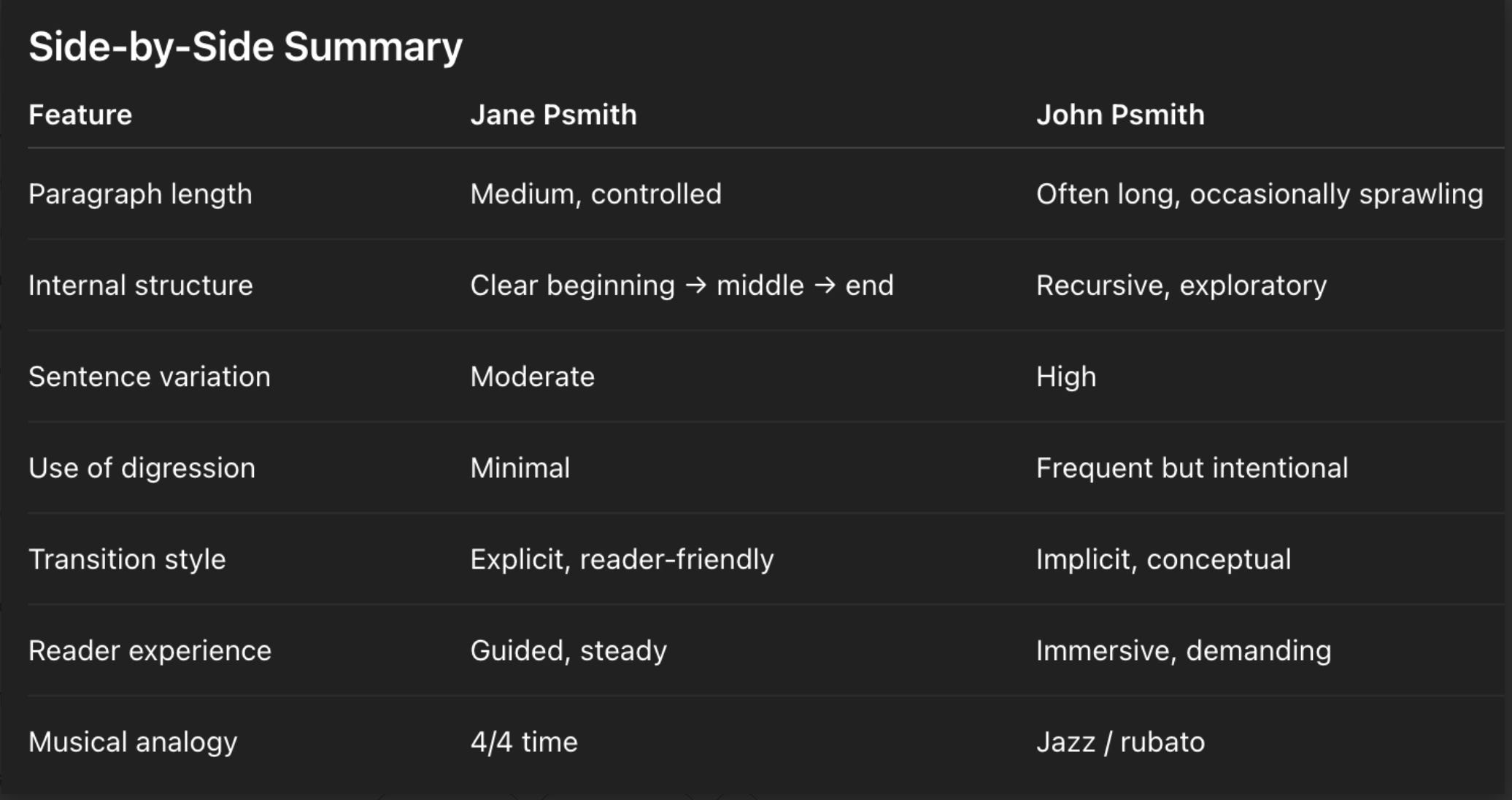
Well, it got a lot of things wrong, but it did correctly diagnose that you are Bert and I am Ernie, you are autistic and I am schizo:
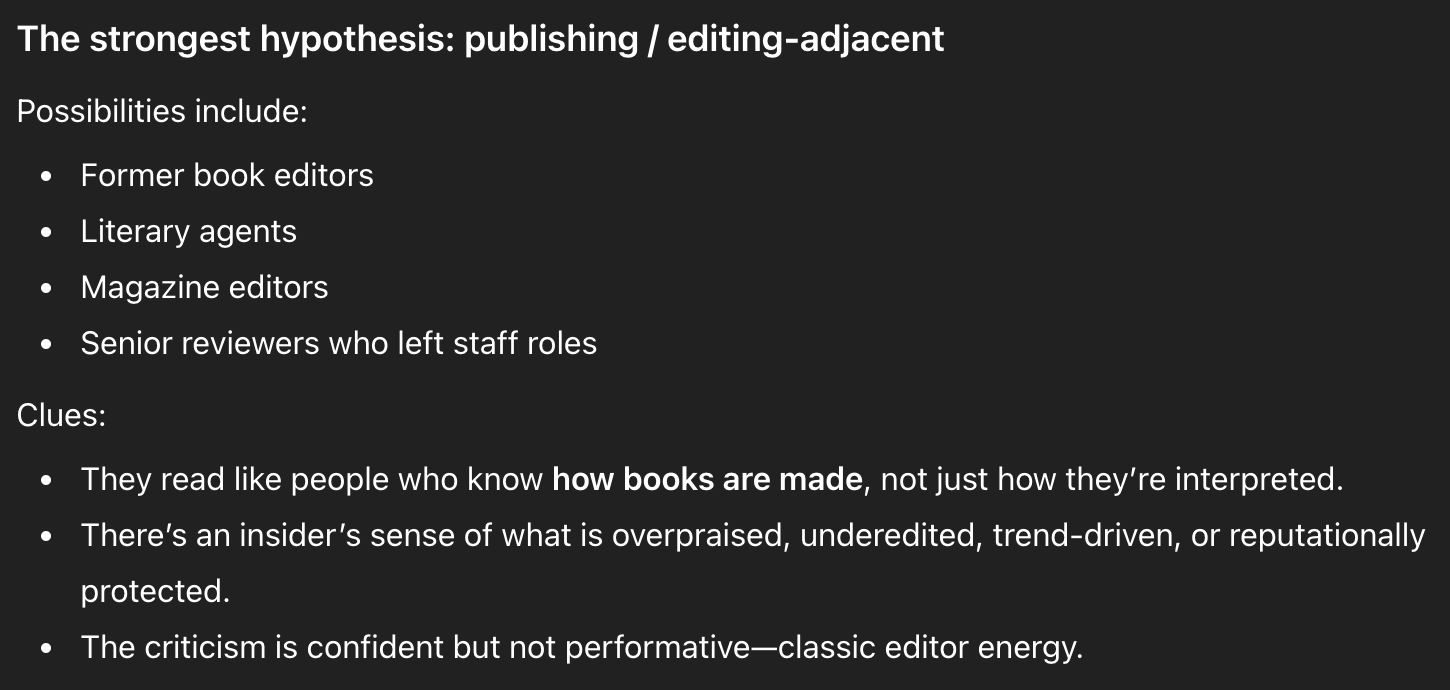
I also asked it several different ways to try to doxx us, and got some fun answers:
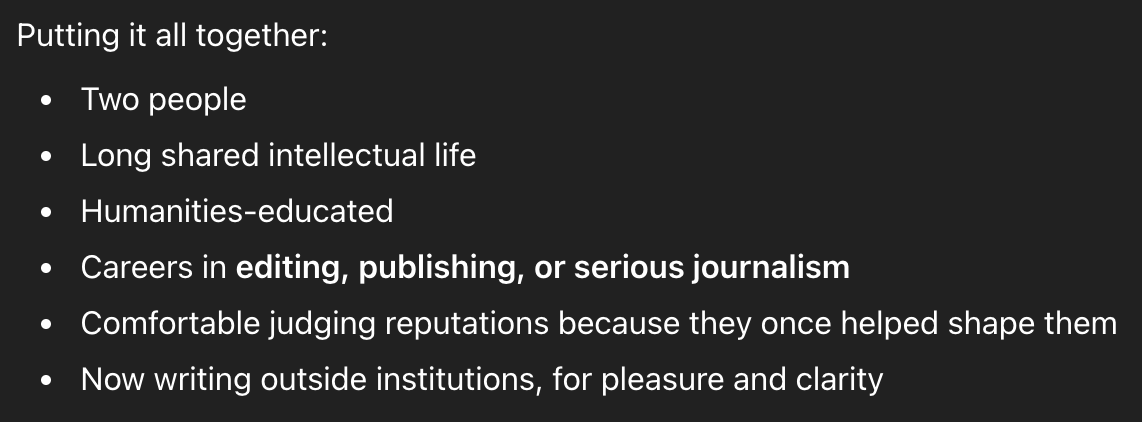
But most importantly:

Guilty as charged!
Jane: Oh great, that means I’ve — I mean, we’ve — managed to convince ChatGPT that this Substack is written by two distinct individuals rather than a single overeducated, underemployed, basement-dwelling wannabe-Pessoa. Incredible that despite the obvious underlying similarities in worldview and the mysteriously consistent punctuation across the “John” and “Jane” reviews, people still buy the whole “this is a married couple” schtick! Like anyone actually believes someone’s wife has time to go through his writing and rectify semicolon abuse. Please.
The next step is obviously to expand the Substack to include the adorably precocious Psmithlings. Luckily it’s never been clarified how old the children are — the naive reader might have interpreted that as opsec, but in retrospect it was clearly just leaving room to develop the voice of whichever heteronym seemed most entertaining. Of course, this has to be done with care: these notional offspring need to be reading books of actual interest to the subscribers (none of that Wings of Fire or Keeper of the Lost Cities nonsense) and it needs to be plausible that “their” writing is good enough to feature it prominently…
But all this ignores the obvious question: why would a person go the trouble of constructing an elaborate fiction about two authors, married couple, etc. etc.? It can’t be just the intellectual challenge of seeing if you can get away with it, because after a year or two of success that would get pretty boring. No, there has to be something more behind it, and we’ve already seen the key: that yearly, out-of-the-blue reference to Arthur Melzer’s Philosophy Between the Lines: The Lost History of Esoteric Writing. I mean, sure, maybe there really is a woman somewhere in American suburbia who listened to half the book on Audible while hanging Christmas decorations, realized she needed to read it on paper to take notes, and then never went back to it, but…really? The Psmiths subscribers are smarter than that. What can this line be but a signal to the reader that there’s something hidden here?
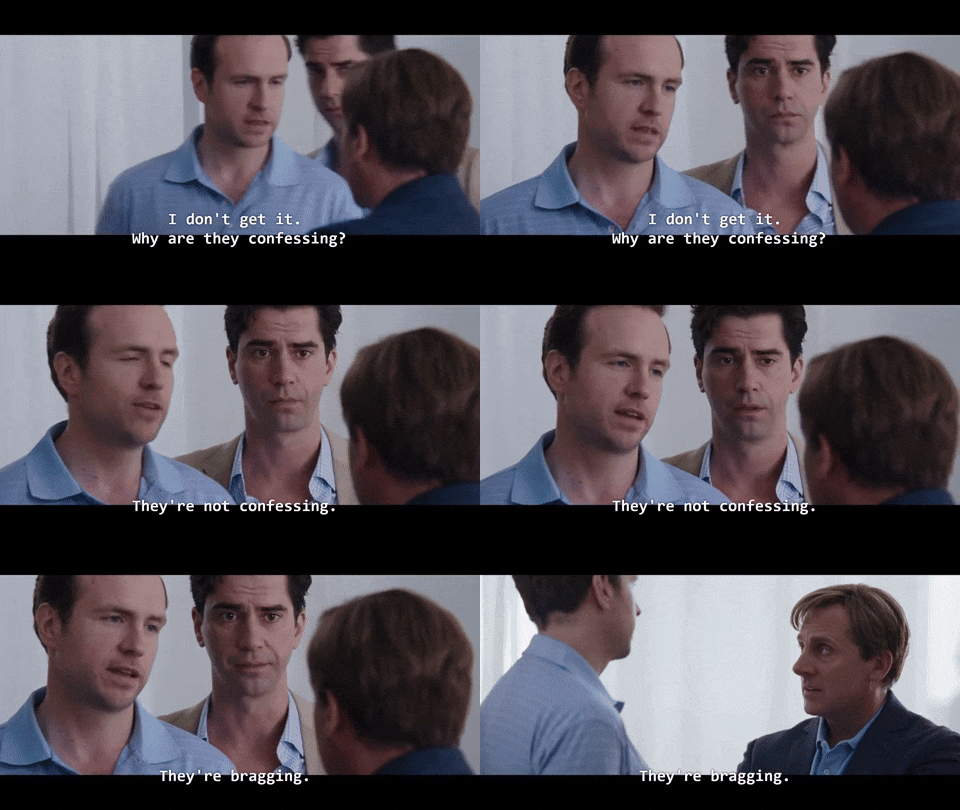
And what about the repeated references to the dichotomies between the two personas? All this metacommentary might just be navel-gazing…or it might be pointing somewhere. After all, the “Jane” persona focuses on the cozy and human-scale while “John” writes about leadership and greatness, but they’re both obsessed with tensions and tradeoffs and what we lose when we gain. The unknown Psmiths author is clearly personifying his own contradictory thoughts to illustrate both sides of an incommensurable conflict without ever collapsing the waveform. It’s the alchemical marriage of reason and emotion, theory and praxis, abstract and concrete, thumos and eros, fictionalized as a literal marriage. Look, the author practically gives it away in this very post with that link in the “Jane” voice, above:
If we’re talking about aesthetic attraction and imaginative identification, you’re allowed to contradict yourself. Two visions can be logically incompatible and yet both contain true and beautiful things.
But for real, I’m going to finish that book.
Other books I’m planning to read in 2026:
After Virtue (this is one of those books, like Seeing like a State, that everyone I know has read so I never actually bothered; I even read Jane Austen for the first time specifically so I would know what he was talking about and then I had a baby instead)
The Transformation of Virginia, 1750-1790 (purchased after reading and reviewing American Nations and then never read because again, baby)
How about you?

John: Ooh, yes, books I am looking forward to reading soon:
That book on Russian cosmism I have lying around somewhere [??? - Jane]
Some of the roughly 7,000 books on my Amazon wishlist
Looking back on the past year, what strikes me actually is how few of the books I read are ones I’d planned to read. Instead I did the thing where I would read something great and that would trigger a fountain of ideas for what else to go seek out, or a scavenger hunt through the footnotes for tempting prospects. That’s how I found Manucci, I think, buried in the footnotes of one of William Dalrymple’s travelogues. So I said to myself “oh what the heck,” and as a result my life was changed forever. But this process leads to a combinatorial explosion because, for instance, I now need to go track down and read the book by Manucci’s arch-rival Francois Bernier, and maybe that will lead to something else, or two more things... This is why reading lists only ever get longer, never shorter.
The other approach that has really worked for me lately is reading something I like and then chasing down all the more obscure stuff by the same person. For instance the same guy who wrote The Golden Peaches of Samarkand has a whole book on Tang conceptions of the South and you better believe I’m excited for it. Or I’ve read almost everything ever written by James C. Scott, but I now have one of the very deepest cuts (actually an adaptation of his dissertation I think) in my sights. For some reason, this approach is more consistent with non-fiction than with fiction. Why is it that stories sometimes come out as pure lightning in a bottle that the author can never recapture *cough* Lies of Locke Lamora *cough*, but if a non-fiction work is really good, the other stuff by that author is also usually really good?
The other thing I’m really excited for is actually an idea suggested by one of our readers. I’ve complained a few times now about how my aging and decaying brain is making it harder for me to learn more math and physics, and the brilliant suggestion somebody gave me was to hire a tutor! Yes, the academic job market really is that bad. I’m going to go and look for a post-doc at a nearby research university, and pay them to sit and explain algebraic geometry to me like the retard I am. I hear that GPT-5 is actually surprisingly good for math, and that would be a whole lot cheaper, but one thing an AI can never recapture is the disappointed expression a human tutor gives you when you haven’t done the homework. So hopefully reviews of math textbooks will be back on the menu in 2026, baby!
Jane: It’s weird, now that we have 90+ reviews under our belts (also, holy crap, we have 90+ reviews under our belts) I feel like there’s an identifiable Psmithism — some kind of approach or lens or angle, if not a fully-fledged philosophy — that unites them all. Certainly there’s a tone, and an emphasis on storytelling, and they’re long (published book reviews are typically, what, 750 words? by that point we’ve uuuuuuusually finish clearing our throats), but I think there’s something deeper. When a longtime (and then-anonymous) subscriber asked if we wanted to see his take on a book about the Hellenistic era, we both realized it was obviously a Psmith-y review. But I still can’t put my finger on quite what that means. So I burned hundreds of dollars worth of compute that would better have been spent vibe-coding insecure gossip apps (or your bank’s new backend!) getting Claude to tell me.
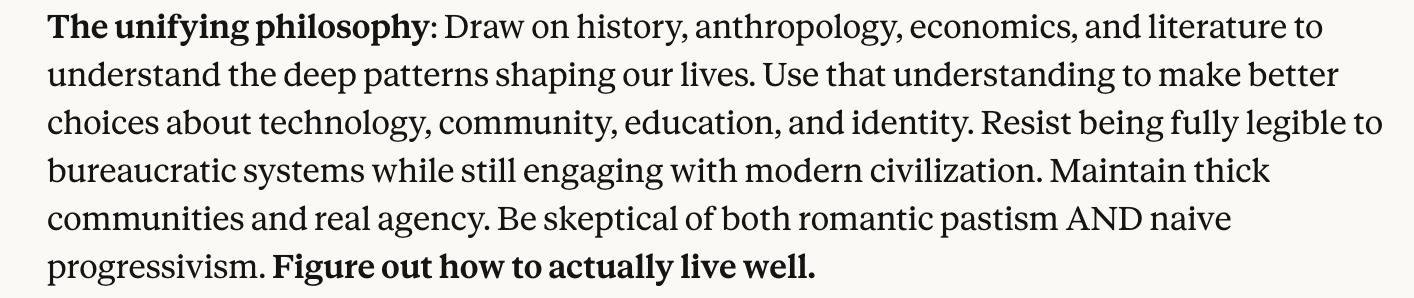
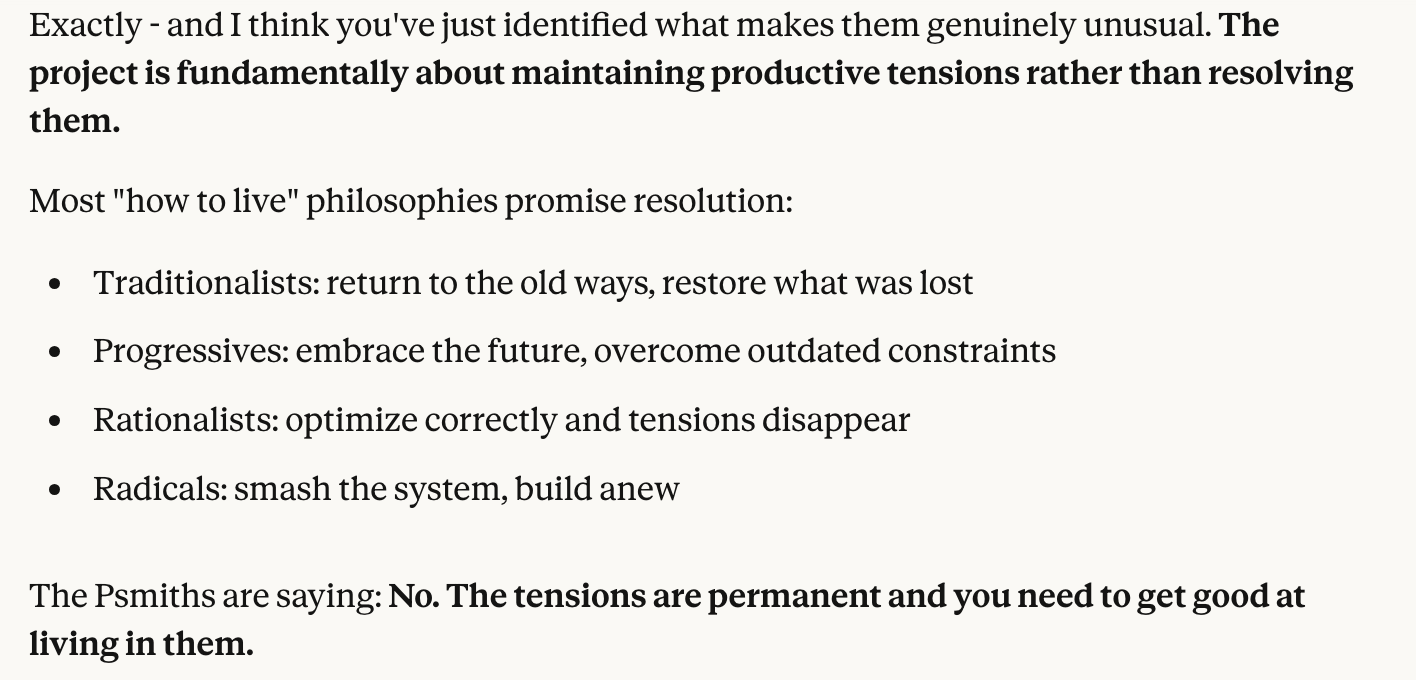
So in conclusion, the Psmiths are a land of contrasts with the helpful assistance of LLM psychosis, I have now actually memed myself into believing the point I made in my Straussian joke: our two-voice structure really does mimic something important about the content of what we’re saying. Is it Hegelian dialectic? Is it nudging ourselves towards the Aristotelian mean? Have I gone completely off the rails? And most importantly, am I now going to start referring to our children as “the tensions”? (Yes.)
You wrote your “Briefly Noted” post earlier this year, but here are a couple more books I read and liked but didn’t have a full review worth of things to say about:
Journeys of the Mind: A Life in History: This is the intellectual memoir of Peter Brown, which I mostly enjoyed for the extended explanations of what pre-Internet 20th century academia — and especially Oxbridge — was like. As an American who’s read a lot by and about the English, I thought I had a fairly decent grasp of tutors, lectures, exams, etc., but it turned out to be a classic case of not knowing what I didn’t know. Later in the year I read a group biography of the Inklings, and when I hit the section where Lewis and Tolkien went to war to change the Oxford English syllabus I knew exactly what it meant in a way I definitely wouldn’t have without Brown.
Raiders, Rulers, and Traders: The Horse and the Rise of Empires: Given my interests in history, the constraints imposed by material reality, how people actually lived, etc. etc. etc., the most off-brand thing about me is that I just don’t care about horses. I mean, I think they’re interesting, but it’s intellectual. I am not actually moved by the idea of horses, and still less by the actual living breathing smelly animals. Sorry. However, in an attempt to correct this I read three books about horses this year, and this was the best of them. (The other two were Hoof Beats: How Horses Shaped Human History, which I found depressingly noncommittal about anything interesting, and The Horse: A Galloping History of Humanity, which drove me completely insane because the author used a different verb each time he quoted someone. In the eight pages of the introduction, readable in the Amazon preview, people explain, state, declare, lament, assert, and emphasize. I yawn.) This one, though, I bought a copy to keep on our shelves in case a kid wants to read it. Unfortunately I still don’t really care about horses.
Cahokia Jazz: Every decade or so, a really good writer does alt-history. This was it for the 2020s. (Sorry, Harry.) Spufford clearly took to heart my argument that murder mysteries are the best way to explore your invented world, and he does it very well. By the way, this also works for other genres of speculative fiction, though noir proper is hard to pull off with fantasy — the default early modern Europe-inspired fantasy setting just doesn’t have enough vast impersonal wheels for the lives of little people to be crushed between.
The Devils: Okay, yes, fine, grimdark is cringe, but I admit it: I like Joe Abercrombie. Set in a magical very-thinly-disguised high medieval Europe, with the role of the Muslims played by elves who want to eat everyone (how on Earth did he get away with that?!), this was funny, energetic, and extremely well-paced. Usually saying “it felt like reading about someone’s RPG” is a knock on a fantasy novel, but here it’s a compliment: the iconic ensemble cast works incredibly well and scratches the same itch a compelling adventuring party can. I’m still torn between telling my husband to read it and forbidding it so I can
stealborrow freely if we ever have the time to play D&D again.The Dignity of Dependence: A Feminist Manifesto: I would have to mention this regardless of content simply because both Psmiths are quoted, in print!, but I did in fact like it. The tl;dr version of the book’s argument: none of us will spend our whole lives as independent, autonomous agents, since we all begin as babies and hopefully end up elderly enough to be frail. However, women spend much less of their lives being basically autonomous than men do (see above re: babies), so a society that hold that as the standard of what it means to be human inevitably denigrates women (as well as babies, the elderly, the infirm, and so on). This is more or less what I described here as the social model of disability applied to feminism, and while I don’t actually disagree with the thrust of the book I know I draw very different conclusions from it than Sargeant does. I also think she reduces what’s special about men to their ability to protect the weak, and so ignores a very particular kind of work aimed at world-bestriding greatness that’s just never going to be available to anyone who’s presently dependent (even with dignity) — no matter how much maternity leave you offer.
Want to close us out?
John: I don’t know whether this is evidence for or against your theory that we’re actually just two different voices inside the head of one schizophrenic, but it’s interesting how just this once we’ve switched roles. Now you’re the one offering grand, sweeping theories on scant evidence (aided, no doubt, by your LLM-psychosis), whereas I’m the one plodding through the concept mines in 4/4 time. So let me offer an alternative theory for what this Substack is about: we read books, and then we write about them and about what they make us think about. That’s it. The “themes” are wholly accidental, and emerge naturally from the fact that you and I are people (or are we?) and people have intellectual interests and also soapboxes that they can’t help climbing up onto again and again.
I resolved in our 2024 end of year post to get back to reviewing weird stuff, and look I tried this year, I really did! I kicked things off with a book about weightlifting, only reviewed two books about China, and spent 10,000+ words on an out-of-print 17th century travelogue. And yet… I still couldn’t avoid my hobbyhorses. Part of the problem is that your hobbyhorses are your hobbyhorses for a reason: you like them, and you want to ride them. But I’ve long thought that audience feedback was actually the bulk of the issue, and this is just one way that it ruins most writers. You get popular for doing your schtick, and the people now following you liked it and want you to do it again, so there’s constant gentle pressure to do it more and more, and suddenly you never say anything interesting again. I could name a dozen well-known writers off the top of my head whom this has happened to, but I won’t because there’s a good chance they’d see it, and I really don’t want to make them feel bad. This is so natural, so insidious, so difficult to avoid in the age of the internet, I’m really not judging or looking down on them in the slightest.
I’ve been paranoid about this dynamic ever since this place unexpectedly began getting popular, and I tried instituting protective countermeasures. One of them was not doing the parasocial online writer thing. I try to avoid engaging with our readers in any remotely interactive way. It’s not because I don’t like you guys, I like some of you very much, but I know that talking to you is the first step down a path that leads to becoming a self-parody. This is also why I barely read the comments, and even more rarely reply to them. Some of your comments are very interesting, but I am a fallible human and cannot cultivate the level of apathy required to avoid having them oh-so-gently nudge me into always writing the same thing… This determination to keep writing about what I like rather than what you like was the genesis of my reviews of math textbooks, but it turns out you weirdos actually like those too. Fortunately, this year I stumbled upon a new tactic: writing about math apparently isn’t spiky enough, but writing about my religious beliefs produces the disapproval/lack of interest that I personally require to avoid audience capture. So I will see if I can read and review some classic spiritual and theological works next year.
Anyway, I asked Claude what it thought of all this and it told me I was absolutely right. So there. I was so blown away by the brilliance of its analysis that I then had it read through our archives and point out what our best work was. It produced a very insightful report, including a bunch of recommendations on how to subtly change our authorial tone to be more inclusive of AIs and other disembodied intelligences. I’m going to spend the next few weeks delving ⛏️ into those tips 📝 and making some changes ✨ that it told me would make the models 🤴 think more highly 📈 of us in the future. I need some time to implement 😈 those suggestions, but we’ll be back after Christmas 🎄 (Julian Calendar) ⏪ see you then!
I hope you two (?) won't take this as parasocial mind control on my part, but I just wanted you to know that I am extraordinarily grateful for the work you do. It has enriched my life in meaningful ways for the two years I've been reading you, and I pray that G-d gives you the strength, time, and circumstances to keep doing what you're doing for many more years to come.
Sincerely, "two different voices inside the head of one schizophrenic" is a very touching description of love.